
Study finds gastric bypass most effective for obesity surgery
A high profile study that has run at Somerset NHS Foundation Trust over the last
decade has revealed that gastric bypass is the most clinically and cost effective form
of interventional surgery for people living with severe obesity.
As the largest completed trial of its kind, involving 1,346 patients, 247 of which were
recruited through Musgrove Park Hospital as the highest recruiting hospital, By-
Band-Sleeve compared Roux-en-Y gastric bypass (‘Bypass’) with two other types of
metabolic and bariatric surgery – adjustable gastric banding (‘Band’) and sleeve
gastrectomy (‘Sleeve’).
It was led by the University of Bristol and supported by the National Institute for
Health and Care Research, with Musgrove Park being the lead centre and first
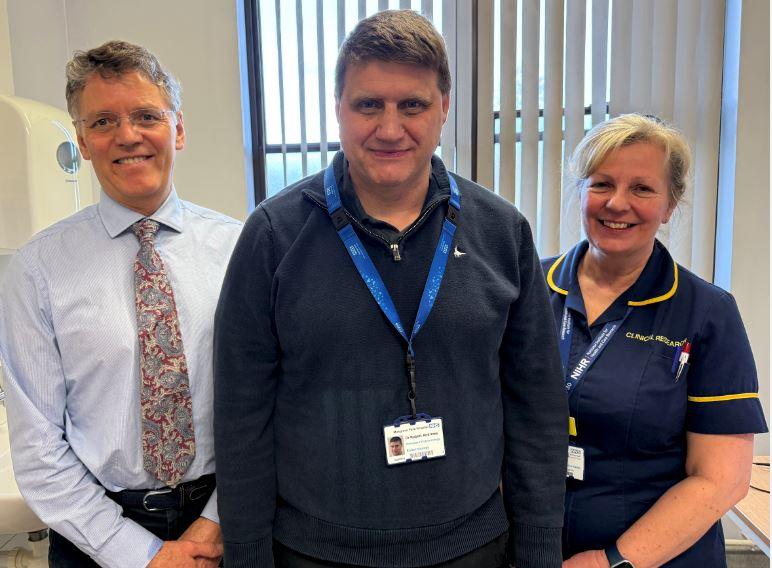
hospital to host it. Professor Rob Andrews, one of the hospital’s diabetes
consultants, was principal investigator in Somerset, and Professor Richard
Welbourn, one of the hospital’s consultant bariatric surgeons, was co-investigator
and the overall lead surgeon.
Current national guidelines recommend surgery is considered for people living with
severe obesity, and in the UK and worldwide, Bypass and Band were very commonly
performed when the trial started.
A third operation, Sleeve, started to be performed more often during the first two
years of the trial and was then included.
Researchers found Bypass to be most clinically effective for patients and to provide
the best value for money for the NHS three years after surgery.
Nicki Salter, Somerset NHS Foundation Trust’s research team leader for bariatrics,
weight management and endocrinology, who was the national lead research nurse
and also led on recruitment into the study at Musgrove Park Hospital, said it has
made such a huge difference to have the results of the By-Band-Sleeve study.
“For the first time we now have the concrete evidence to tell patients considering
bariatric surgery which operation is best out of the three procedures compared,” she
said.
“This is not only around weight loss and cost effectiveness, but also in terms of
quality of life, which perhaps is the most important factor.”
Jane Blazeby, Professor of Surgery at the University of Bristol, who led the trial,
added:
“Based on the trial findings, we recommend patients
electing to have bariatric and metabolic surgery are advised to have Bypass. Sleeve
should be a secondary option when Bypass is not possible. Our evidence does not
support Band as standard treatment for people living with severe obesity.
“The hard work undertaken by all the study participants, surgeons, nurses and
dietitians means we now have reliable information to inform NHS practice.
“The next challenge is for surgical teams to work with researchers and physicians to
conduct a new study that compares surgery to weight loss drugs to create evidence
to understand how they compare surgery in terms of weight loss, quality of life and
costs.”
Professor Danny McAuley, Scientific Director for NIHR Programmes, said: "Obesity
is one of the biggest challenges facing us globally and in the UK. This treatment will
help save lives and improve the quality of life for patients, while providing better
value for money for the NHS.
“NIHR funded trial results provide vital evidence that gastric bypass improves the
quality of life for UK patients and help clinicians and those providing NHS and care
services choose the best treatments.
“The findings demonstrate how our life changing NIHR research, funded by the
public, has impact to support the health and care sector to achieve more effective
and efficient use of resources.”
The study found that 68% (276) participants randomised to Bypass achieved at least
50% excess weight loss after three years, compared to 25% (97) for Band and 41%
(141) for Sleeve.
On average trial participants lost 26.5kg (just over 4 stone). Some people lost as
much as 98 kg (over 15 stone). There were a few that gained weight (<10%).
Bypass led to a greater reduction in comorbidities, such as high blood pressure and
diabetes. Bypass was found to be the most cost effective option when taking into
account patients’ quality of life using a standard UK cost threshold applied by NICE.
So, although Bypass was a more costly operation initially, it led to better quality of
life and lower healthcare costs after three years compared to the other two surgeries.